

Breeze TTS 2
A bilingual (English/Chinese) text-to-speech model built for ultra-low-latency streaming that enables text-driven voice creation, voice cloning, and fine-grained emotional control
Note: Please open in the PC Client. Go to download >>>
Features
Supported Languages
System Requirements
Minimum 16GB RAM. 21GB+ storage recommended.
macOS 15+: M-series chips required.
Windows 10/11: NVIDIA GPU with 8GB+ VRAM required.
Note: For NVIDIA GPUs, install a newer driver.Screenshots
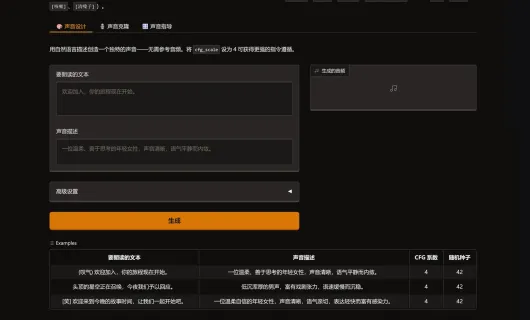
Introduction
License Notice: The code is licensed under Apache-2.0, while the model weights are governed by the BreezeBlue Non-Commercial License. Strictly for personal learning and academic research; any commercial use is prohibited.
1. Key Features & Capabilities
breeze-tts is the official PyTorch inference repository for Breeze TTS 2, an open-weight text-to-speech model. Put simply, it transforms written text into highly expressive, human-like speech with full bilingual support (English and Chinese).
It offers three primary ways for users to control voices:
- Voice Design: Generate a unique, brand-new voice from scratch using a natural language text description (e.g., "a warm young woman with a clear voice and a calm delivery"), with no audio sample required.
- Voice Clone: Replicate a specific person's timbre, emotion, and speaking style by providing a short reference audio snippet and its exact transcript.
- Voice Direction: Steer the tone, emotion, and pace of a cloned voice using text instructions (e.g., "deliver this in a fast, excited tone").
- Inline Vocal Events: Insert natural human expressions directly into text, such as
(laugh),(sigh),(cough), or(clears throat)in English, or[笑]/[叹气]in Chinese.
2. Developer & Target Use Cases
- Developer: Developed and open-sourced by the BreezeBlue team (RESONIA, INC.).
- Use Cases:
- Real-time Conversational AI: Voice assistants, real-time translation, customer service agents, and interactive NPC dialogues in gaming.
- Content Creation: Audiobooks, podcast generation, and short-video voiceovers.
3. Underlying Technology & Performance
- Underlying Tech: Built on PyTorch, with its core audio tokenizer component developed based on Alibaba Qwen Team's Qwen3-TTS.
- Low-Latency Streaming: Supports real-time streaming generation with a Real-Time Factor (RTF) of 0.32 (generating audio ~3.1x faster than real-time playback). With CUDA Graph acceleration enabled, it achieves a Time-To-First-Audio (TTFA) latency of under 40 milliseconds on an NVIDIA H100.